
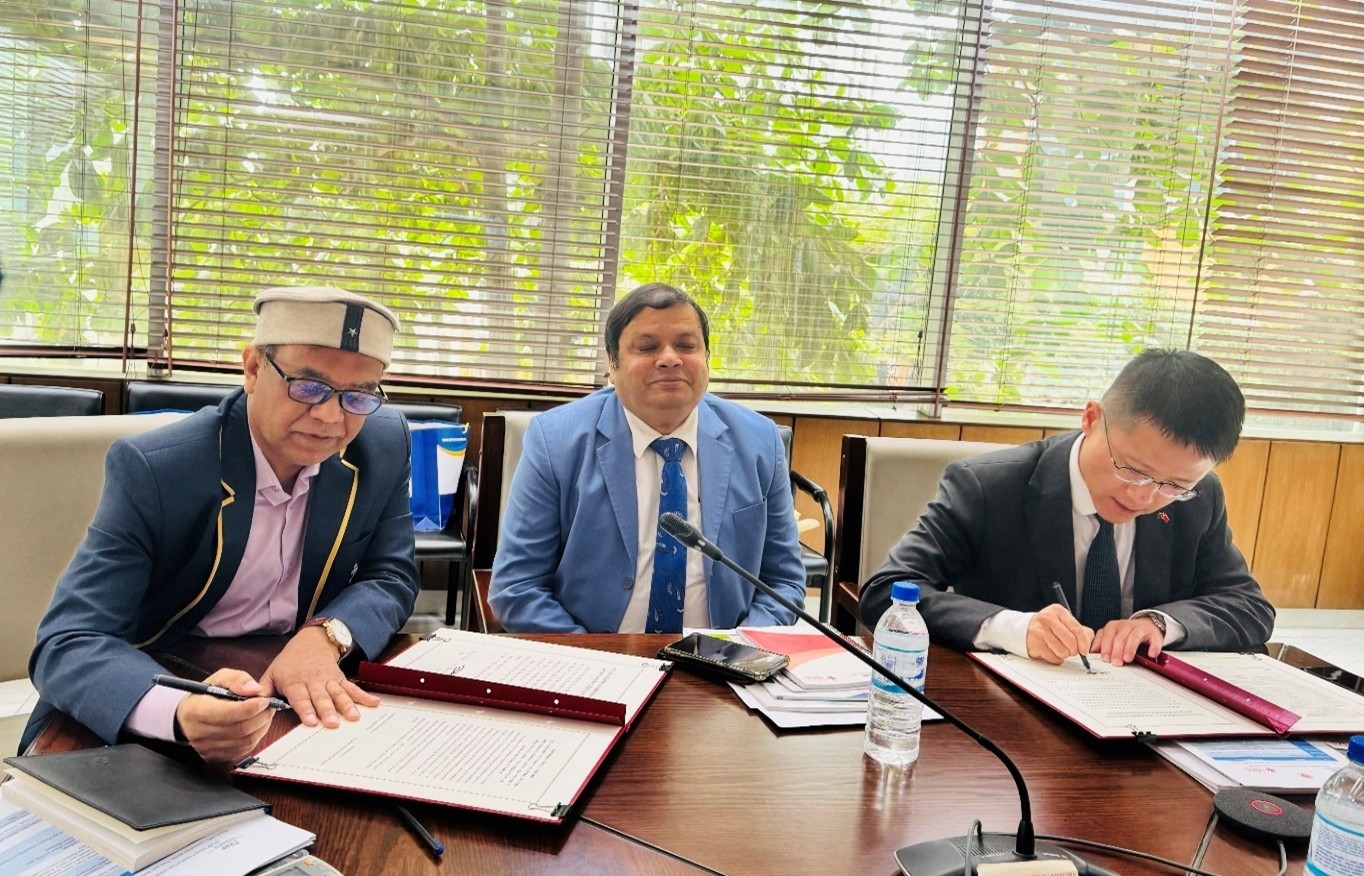
Partners in Population and Development (PPD) and the Embassy of the People’s Republic of China in Bangladesh officially signed the Project Completion Certificate for the South-South Cooperation Assistance Fund (SSCAF) project titled “Providing Comprehensive, Safe, and Appropriate Intervention to Prevent Postpartum Hemorrhage for Reducing Maternal Mortality in Bangladesh.” This event marks a significant milestone in the collaborative journey between the two countries to improve maternal health and reduce maternal mortality through strategic South-South Cooperation.
Implemented in six Upazilas across Gazipur and Manikganj districts, the project—generously supported by China Aid—made a substantial impact on enhancing maternal health services. It contributed to building the capacity of frontline health professionals and improving care for pregnant mothers in Bangladesh.

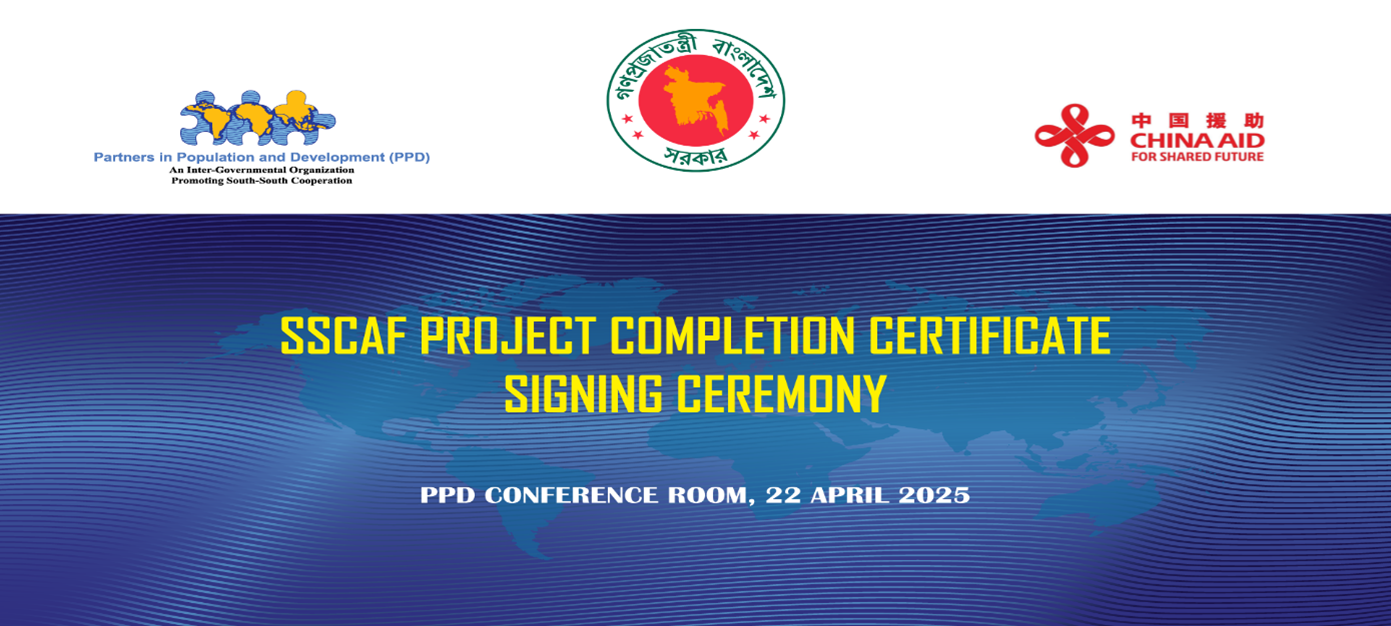

The signing ceremony was attended by distinguished representatives including Mr. Song Yang, Counselor, and Mr. Shi Cheng, First Secretary of the Chinese Embassy; Mr. Md. Mahbub Alam, Additional Secretary, Medical Education & Family Welfare Division, Ministry of Health and Family Welfare, Bangladesh, and Partner Country Coordinator (PCC) of PPD; Ms. Sainy Azeez, Senior Assistant Secretary of the same Division; and PPD staff members including Dr. Nazrul Islam, Acting Officer-in-Charge of PPD; Mr. Khandaker Humayun Kabir, IT Manager; Mr. Mrityunjoy Das, Senior Admin Officer; Ms. Tahrima Khan, Senior Program Officer and Project Manager; and Ms. Jerin Tasneem Jyoti, Executive Assistant. The certificate was formally signed between Mr. Song Yang and Dr. Nazrul Islam. Ms Tahrima Khan as Project Manager of this project has presented the project’s key achievements. In her presentation she mentioned that this project initiative made significant contributions through the development of a comprehensive training module, handbook, and multimedia courseware with support from NRIFP (China) and DGFP (Bangladesh); specialized training for 270 health professionals on PPH prevention and the use of misoprostol; and education of 300 pregnant women and their close relatives—an innovative approach that empowered communities. Approximately 61,000 boxes of misoprostol and 20,000 postnatal kits were distributed via the DGFP supply chain. Local government representatives, including Members of Parliament, participated in awareness sessions, while 50 senior administrators received their first orientation on PPH. Satellite-level training was conducted across 56 Unions, and advocacy/IEC materials—including a jointly developed drama-video—were adopted by the government for use in health facilities.
An independent evaluation study confirmed the intervention’s safety, effectiveness, and feasibility, citing a 25–47% reduction in PPH cases and a sharp increase in health worker knowledge, with post-training scores rising from 48.0 to 79.7. Following an external audit, the final report and financial closure were approved by China Aid and the Chinese Embassy. In recognition of its success, the Government of Bangladesh issued a certificate of appreciation to the Government of China and recommended the national scale-up of the intervention.

This successful project not only demonstrates the tangible impact of collaborative South-South efforts but also paves the way for future opportunities. It reaffirms PPD’s strategic role in fostering development cooperation among the Global South. With continued support from the Government of China, PPD is now well-positioned to expand its initiatives, scale successful interventions, and deepen partnerships for sustainable development and improved health outcomes worldwide.
Mr. Mahbub Alam, Additional Secretary, MoHFW referred that President Xi Jinping in his speech during the meeting with Bangladesh Interim Government Head and the Nobel Laurate Professor Dr. Mohammed Yunus said China maintains a high degree of stability and continuity in its good neighbor and friendly policy toward Bangladesh, and continues to be a trustworthy neighbor, friend and partner of Bangladesh which is an opportunity for us to collaborate each other to address critical challenges like reducing maternal mortality to 70 by 2030 as per SDGs goal 3. Mr Alam also said that the SSCAF project was successfully implemented in 6 Upazilas of 2 Districts: Manikganj (Manikganj Sadar, Saturia, Ghior, and Harrirampur) and Gazipur (Kaliganj and Kaliakair) in Bangladesh. As piloting of the project, PPD has succeed to make changes with impact in project areas and they have developed skilled, knowledge and experiences which they can utilize now to implement such project in other districts of Bangladesh and any other member countries of PPD. Mr. Alam strongly recommended as high-level government officials to expand the project activities from these 2 districts to other districts and PPD member countries.
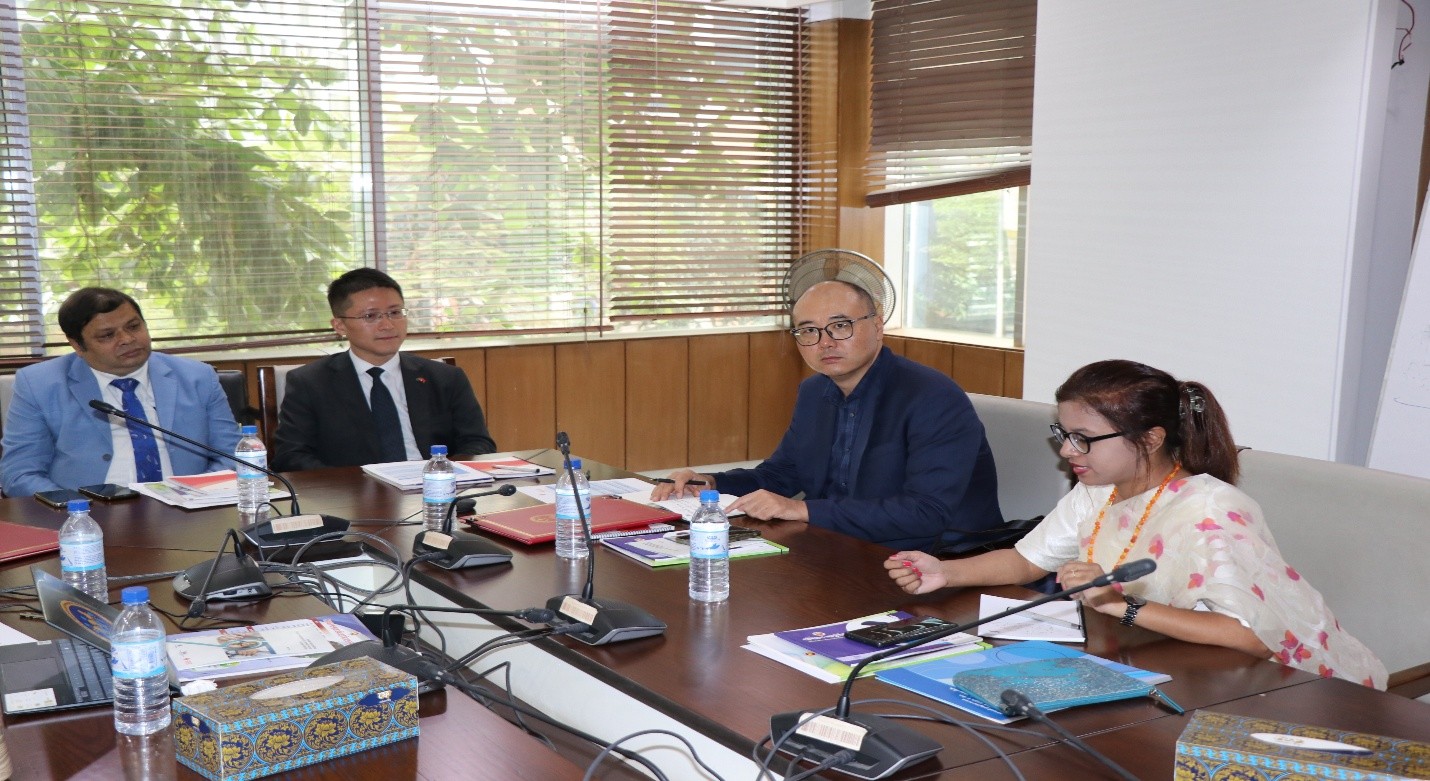
Ms. Sainy Azeez, Senior Assistant Secretary of the Health and Family Welfare Division stated that though Bangladesh is committed to reduce maternal mortality however, it has lack of capacity to address such a critical problem as approximately 14 mothers die each day in Bangladesh due to pregnancy complications. The main reasons for these deaths are hemorrhage, eclampsia, and obstructed or delayed deliveries. The Chinse project support directly benefited to pregnant mother health and the collogues from the Embassy of China in Dhaka may support PPD to expand the project in other districts as well as to other countries where similar problems existed.
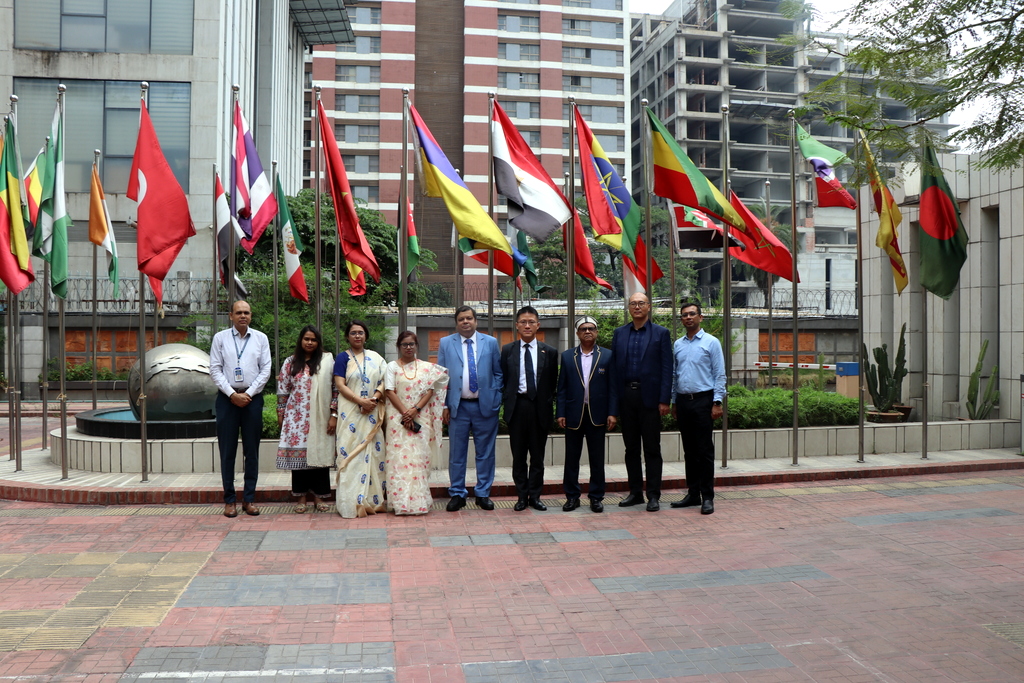
In conclusion, on request of Bangladesh Government represented by Mr Mahbub Alam, Additional Secretary of Ministry of Health and Family Welfare, the Counselor of China Embassy Mr. Song Yang agreed that PPD may submit the proposal endorsing from the Ministry of Health and Family Welfare to scaling-up the project in other Districts of Bangladesh. The Embassy will forward to the proposal to the China International Development Cooperation Agency which is the main responsible authority to approve the project. Mr. Song Yang also said that his government is committed to support people of Bangladesh.
