
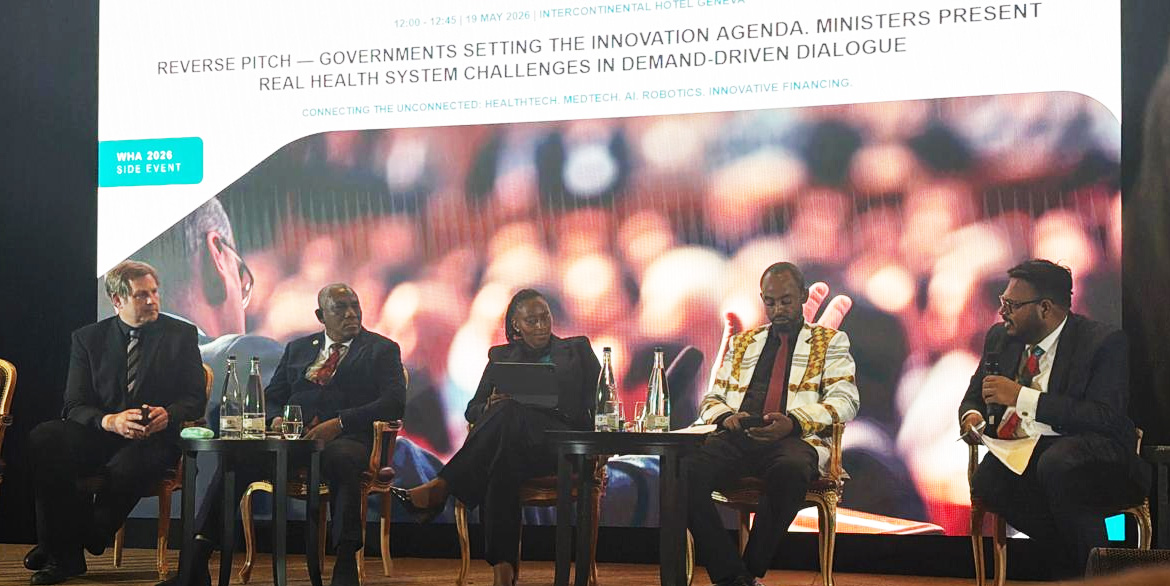
19 May 2026, Geneva, Switzerland – On the sidelines of the 79th World Health Assembly (WHA79) in Geneva, Professor Dr. Joseph Akinkugbe Adelegan, Executive Director of Partners in Population and Development (PPD), took the stage at a thought-provoking side event that is rewriting the rules of health innovation dialogue.
The event, titled “Reverse Pitch: Governments Setting the Innovation Agenda,” was organized by the Health Innovation Exchange (HIEx) and brought together an influential mix of government leaders, innovators, investors, and development partners. What made it stand apart was its refreshingly bold premise: instead of innovators pitching to governments, it was the governments doing the pitching, laying out their most pressing national health challenges and inviting the innovation community to respond. By enabling Ministers and senior government officials to define the agenda, the model aims to accelerate solutions that are genuinely policy-aligned, catalyze targeted investment, and carve clearer pathways from promising pilots to sustainable, nationwide implementation. The dialogue was designed not just to spark ideas, but to forge lasting partnerships and co-investment that can drive long-term systems transformation.
Professor Adelegan’s presentation resonated deeply with the spirit of the event. Speaking with conviction, he made a compelling case that PPD’s 28 Member Countries must not be treated as passive recipients of outside innovation, they must be recognized and empowered as architects of their own transformation. He highlighted an honest picture of the shared realities facing health systems across the Global South: rising disease burdens, critical workforce shortages, fragile primary health care infrastructure, constrained budgets, and the compounding pressures of climate change and humanitarian crises. Against this backdrop, he argued that innovation detached from national priorities, regulatory frameworks, and real service delivery contexts is innovation that will ultimately fall short.
He outlined the priorities that cut across PPD Member States primary health care transformation, health workforce retention, maternal and adolescent health, digital interoperability, and sustainable financing. He called for a deeper, more deliberate alignment between governments, innovators, and investors, one that produces solutions that are not just effective in theory, but scalable and affordable in practice.
His remarks carried an unmistakable sense of urgency around one particular challenge: the persistent gap between pilots and policy. Too often, he noted, the global health community celebrates successful pilots that never grow beyond their original scope. Closing that gap, he argued, requires country-led design from day one, early alignment with policy processes, integrated financing conversations, and regulatory engagement that begins at the start, not as an afterthought.
One of the most compelling dimensions of Professor Adelegan’s remarks was his articulation of PPD’s unique role as a platform for South-South Cooperation. He highlighted the practical advantages Member States can offer one another: shared implementation experiences, joint procurement possibilities, common digital standards, regional innovation hubs, and peer-to-peer technical assistance. As an intergovernmental body, PPD is distinctly positioned to facilitate this cross-country learning and translate it into collective progress toward resilient and equitable health systems.
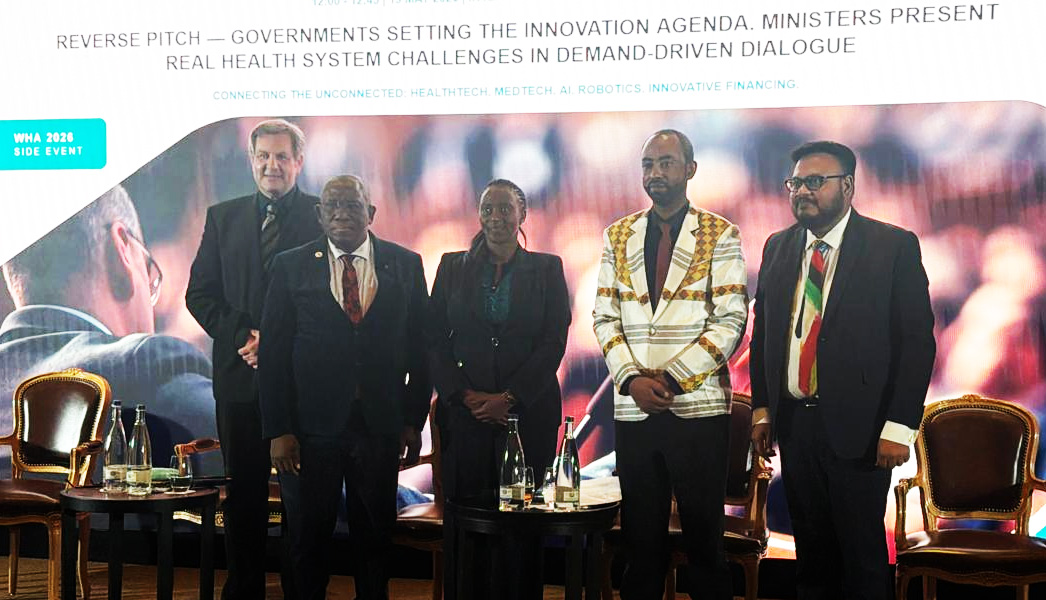
The event concluded with a call to action for governments to lead with clear priorities, for innovators to design for scale and affordability, for investors to finance transformation rather than short-term experimentation, and for development partners to enable genuine country ownership. PPD’s participation in the dialogue reflected its continuing commitment to advancing South-South and Triangular Cooperation and to supporting practical, country-driven innovation for better health outcomes across the Global South.
