
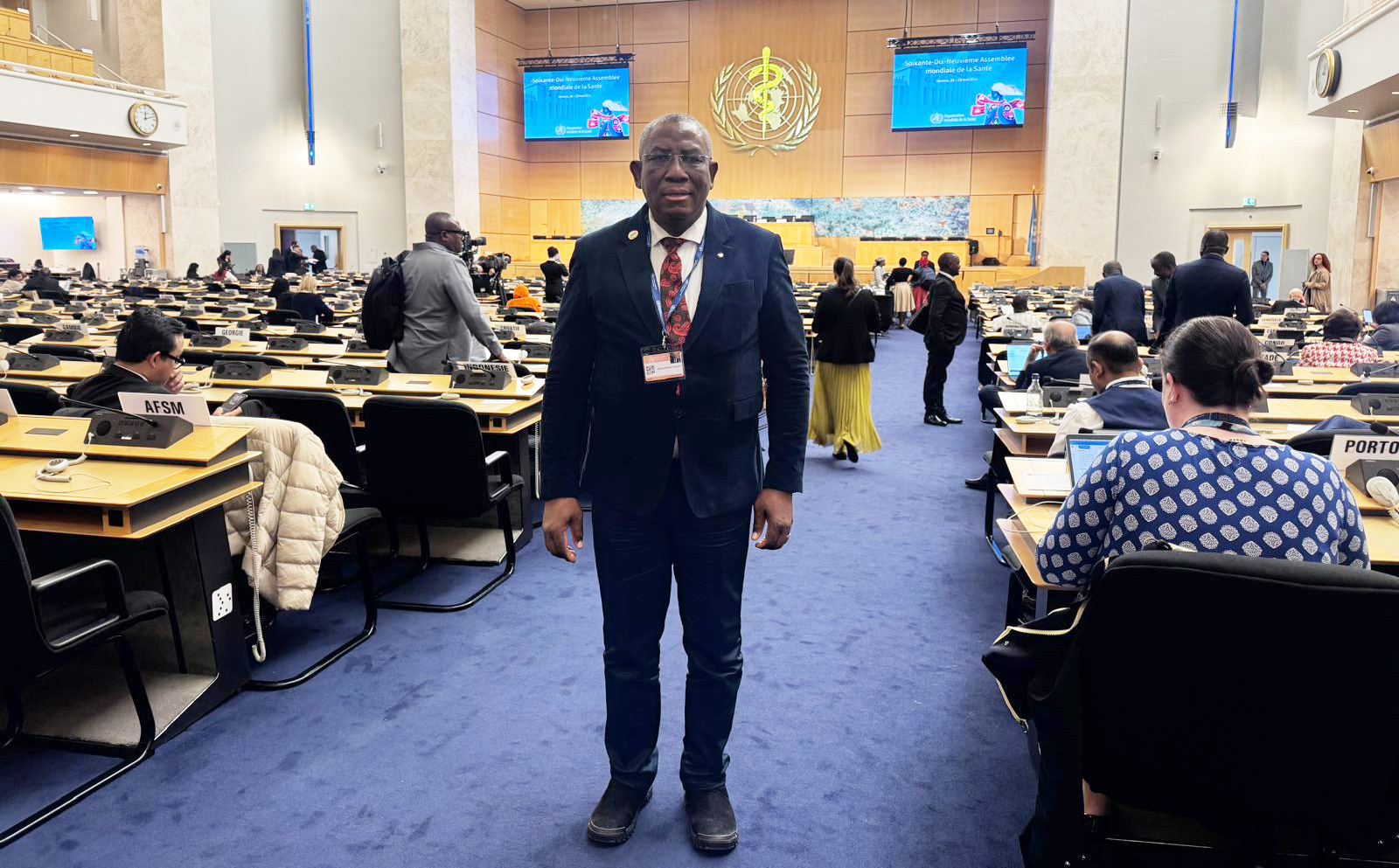
Partners in Population and Development (PPD) marked a meaningful step forward in its international engagement as its Executive Director, Professor Dr. Joseph Akinkugbe Adelegan, participated in the Seventy-Ninth World Health Assembly (WHA79), held in Geneva from 18 to 23 May 2026. Convened by the World Health Organization, the World Health Assembly is the WHO’s principal decision-making body, bringing together Member State delegations and global health stakeholders to deliberate on critical public health priorities and shape the direction of international health policy.
PPD’s presence at WHA79 reflected the organization’s deepening commitment to contributing meaningfully to global conversations on health systems strengthening, reproductive, maternal, and newborn health, and innovation for equitable development. Throughout the Assembly, Professor Adelegan attended and presented at several high-level side events, where he shared policy insights and lessons drawn from PPD’s 28 Member Countries. His contributions highlighted the practical value of South-South and Triangular Cooperation in addressing complex health challenges across the Global South, spanning shared accountability for maternal and newborn health, government-led health innovation, and the digitization of the maternal health workforce. Each presentation reinforced a common thread: that leadership, governance, digital transformation, equity, and sustainable partnerships are essential to improving health outcomes for the world’s most vulnerable populations.
Through these engagements, PPD further established itself as an intergovernmental platform that not only supports policy dialogue and technical cooperation among developing countries but also contributes substantively to global discussions on resilient health systems, maternal and newborn survival, and innovation-driven service delivery. Professor Adelegan’s presentations made clear that the challenges confronting health systems today workforce shortages, fragmented service delivery, financing constraints, and unequal access to care which cannot be resolved in isolation. They demand coordinated action anchored in country ownership, regional solidarity, and context-sensitive innovation.
Beyond the sessions themselves, WHA79 held significant institutional and strategic value for PPD. As one of the most influential gatherings in global public health, the Assembly offered an important platform for visibility, partnership-building, and direct policy engagement with governments, multilateral agencies, philanthropic actors, and innovation partners. It allowed PPD to deepen its profile within the broader global health architecture, strengthen dialogue with complementary organizations, and demonstrate the comparative advantage of South-South Cooperation in advancing sustainable health and development solutions.
On the sidelines of the Assembly, Professor Adelegan held a series of bilateral meetings with partner organizations as part of ongoing efforts to establish a PPD representation office in UN Geneva, positioning PPD more firmly as a hub for global health diplomacy and multilateral engagement. In parallel, he advanced discussions toward securing official accreditation with the World Health Organization as an intergovernmental organization, a significant step that would enhance PPD’s formal engagement with WHO processes and open new avenues for policy advocacy, technical collaboration, and representation in key global health forums.
PPD’s participation in WHA79 reaffirmed the organization’s readiness to engage more actively in international policy spaces and to bring developing-country perspectives to the heart of global health decision-making. It also underscored a broader truth: that sustained presence in major multilateral platforms is not simply a matter of visibility, it is where partnerships are built, institutional recognition is earned, and the voices of the Global South find their place in shaping a healthier, more equitable world. Through its growing presence in Geneva, PPD remains committed to bridging national experience, regional cooperation, and global action in service of more resilient and inclusive societies.
