

20 May 2026, Geneva, Switzerland – The Executive Director of Partners in Population and Development (PPD), Professor Dr. Joseph Akinkugbe Adelegan attended and made a presentation at the high-level side event, “Delivering Impact through MPDSR: Shared Accountability for Maternal and Newborn Health,” held on 20 May 2026 on the margins of the 79th World Health Assembly (WHA79) in Geneva, Switzerland. The event was hosted by the Ministry of Health of Kenya and the Council of Governors of Kenya.
The side event was convened at a critical moment in global health, under the broader WHA79 context of reshaping health systems through shared responsibility and locally led accountability. It highlighted Kenya’s experience in advancing Maternal and Perinatal Death Surveillance and Response (MPDSR) as a practical governance tool for reducing preventable maternal and newborn deaths, while also promoting peer learning, digitization, and stronger coordination between national and sub-national health systems.
Professor Adelegan’s presentation, titled “The Role of Right Leadership and Governance in Ending Preventable Maternal and Neonatal Deaths and Advancing Health Equity and Justice: Lessons from PPD 28 Member Countries,” emphasized that preventable maternal and neonatal deaths are not only health outcomes but also reflections of leadership, governance, equity, and justice. Drawing on lessons from PPD Member Countries, he underscored the importance of political commitment, accountable institutions, equitable financing, community-centered primary health care, and South-South cooperation in improving maternal and newborn survival.
In his remarks, the Executive Director highlighted successful policy and governance experiences from countries such as Bangladesh, Rwanda, Indonesia, and Egypt, demonstrating how leadership and institutional accountability can help expand access to skilled care, strengthen referral systems, improve data use, and accelerate progress in maternal and newborn health. He reaffirmed PPD’s role as an intergovernmental platform for policy dialogue, technical cooperation, knowledge exchange, capacity building, and shared learning among developing countries.
Professor Adelegan used the platform to call for strengthened political commitment, increased domestic health financing, stronger primary health care systems, equity-focused universal health coverage, improved accountability and data systems, deeper South-South Cooperation, and greater women’s leadership in health governance. He stressed that maternal and newborn survival must remain both a public health priority and a moral imperative.
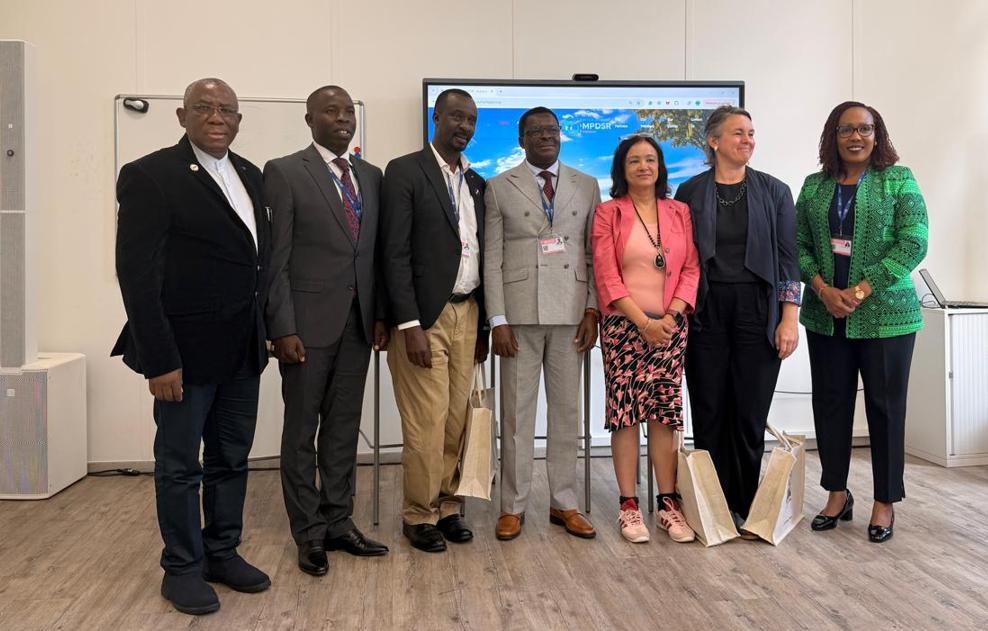
PPD’s participation in the side event reflected the organization’s continued commitment to advancing practical, country-led solutions to reproductive, maternal, newborn, and population health challenges through South-South and Triangular Cooperation. The engagement also reinforced PPD’s readiness to work with governments, global partners, and regional actors to promote evidence-based leadership and accountable governance for better health outcomes.
